
Finding your own style
You’re looking through your photos and there’s someone standing halfway in a doorway again. Different street, different person, but apparently that keeps making you stop.
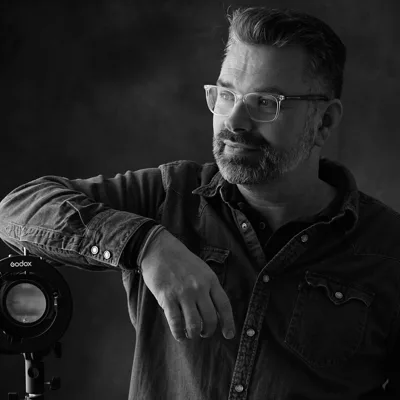
Michiel Heijmans, one of the editors
Updated on October 13, 2026
There’s that doorway again
One photo of someone in a doorway doesn’t tell you much. Maybe the light was nice. Maybe that person happened to walk through your composition. But when photos like that keep turning up in different selections, it gets interesting. What keeps drawing you back?
The way the door frames the scene? Someone almost disappearing from view? Or that moment when you can’t yet tell whether someone is going in or coming out?
I think finding your own style starts with questions like these. Just with photos you’ve already taken. You don’t need to be able to explain what kind of photographer you are yet. Start by looking at what you seem to enjoy looking at.
That sounds less impressive than developing your own photographic vision. But it is something you can start this afternoon.
What keeps catching your eye?
Open a folder of photos you enjoy returning to. Include some older work too. Pick, say, twenty photos that still mean something to you, without immediately judging their technical quality.
Put them side by side. A screen works fine for this. Start by looking at what’s actually in them.
Maybe there are lots of people whose faces you can’t see. Or a bit of nature keeps turning up among the concrete. It can also be less literal: people often appear small in your photos, with plenty of space around them. Or you keep coming back to postures and gestures.
Try writing one specific sentence under a few photos. “I like this one” doesn’t get you very far yet. “That hand on the door makes me curious about what’s happening” gives you something to look for as you go on.
You’re not looking for an explanation that accounts for your entire archive. A recurring interest is enough for now.
From looking at others’ work to making your own choices
Someone else’s photo can give you an idea. You notice a shadow used as a shape, a color that holds everything together, or a frame within the scene that you would have walked right past. You can practice with that.
Try to put into words what appeals to you, too. If you stop at “I want to take a photo like that,” it’s mostly the end result that stays with you. If you notice that you’re drawn to the space around a person, you have something to explore for yourself on the street.
Copying gives you an example to recreate. Your own style calls for your own choices. What catches your eye when that reference photo is no longer in front of you? What holds your attention, even when it looks nothing like the work you admire?
My style doesn’t have to become yours. That would be a little boring anyway. It’s the differences that make looking at each other’s photos worthwhile.
A series makes it visible
A single photo can easily get lost among the rest. Put a few related photos together and it becomes easier to compare what you’re doing with them.
Start small. You remember a photo of someone stepping inside somewhere. Later, you take another and think: I’ve photographed that before. Try putting those two in the same folder.
That’s how a series can start. You don’t need a project plan before you’re allowed to put the first photos together.
Then look at what connects the photos. Just the subject? Or also the distance, the light, the moment you press the shutter? Maybe what interests you most is the hesitation of someone lingering on a doorstep. That takes your series in a different direction than if you mainly use doors as frames.
My article on creating photo series explains how to take this further. A series helps you look back and see what keeps catching your eye. And if you take a photo along the way that you can add, you have a reason to open that folder again when you get home.
Give yourself something to try
Once you’ve found a recurring subject, you can pay more deliberate attention to it for a while. People in windows and doorways, for example. Keep that interest in mind as you walk.
Afterward, compare your new photos with your earlier selection. Which would you add? Which feels like a repeat that adds very little? And which is different but makes you curious?
You can also change one choice. Stay a little farther away so the surroundings take up more of the frame. Then look at what that does to the photo. Does that distance suit what you want to show?
It doesn’t have to produce something every time. An experiment can also show you that your earlier choice suits you better. At least then you know why you keep returning to it.
A style isn’t a lifelong commitment
Once you’ve found a few similarities, you might feel tempted to take only those kinds of photos from now on. You’ve finally recognized something, and you immediately turn it into a set of house rules.
That seems a little premature to me.
You can enjoy working with hard shadows and still take a photo where soft light works better. You can make one series in black and white and find, in another, that color says something you want to keep. You can read more about that choice in my article on black and white and color.
Try keeping a photo that doesn’t seem to belong anywhere but that you keep coming back to. Maybe it will remain a standalone photo. Maybe one day there will suddenly be a second one beside it.
You don’t have to declare your style finished. Keep looking back now and then. Apparently, that doorway was interesting. Now you can start to see what you’re looking for in it.
Questions about Finding your own style
How do I know if I have my own style?
Look at several photos side by side. Do certain subjects or choices recur, such as distance, framing, or light? That gives you some clues. You don’t need a name for it. First, try to recognize what keeps drawing you in.
Do all my photos have to fit the same style?
No. You can explore different things and make different choices for each photo or series. A photo that stands apart can be a reason to look further. Feel free to keep it alongside the work where you already see similarities.
How can I work on this over time?
Keep adding to a series and regularly look back at what you’ve added. If you’d like guidance with that, there’s Streetwise, my in-depth email course for advanced photographers looking for their own style. You work on it for six months, at your own pace, with a story about observing and an invitation to head out onto the street every two weeks.
5 essential street photography tips
Sign up for Michiel’s newsletter and get his free e-book with practical tips and favorite street photos. First, confirm your email address using the link in the email.
About Michiel Heijmans
Portret- en straatfotograaf. Boeken: Straatfotobijbel (Photofacts Publishing), The Observer (Uitgeverij KOMMA), De Wet van de Straat (met mr. Charlotte Meindersma). Columns voor Photofacts, voorheen voor Focus Magazine. Expert Perfecte Plaatje 2025. Lezingen voor CameraNu en fotoclubs. Podcast 30…
View Michiel Heijmans’s profile