
The decisive moment in photography
Someone is walking toward a strip of light between two buildings. You've already chosen your composition, but when do you press the shutter: as they first step into the light, when they're in the middle, or just before they enter it?
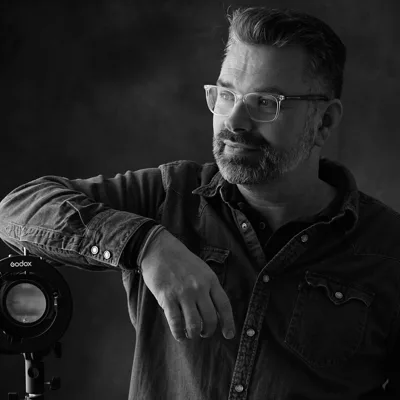
Michiel Heijmans, one of the editors
Updated on October 13, 2026
When everything briefly comes together
A foot leaves the ground, a hand goes up, and someone in the background looks up. You can press the shutter at any of those moments. Which photo works depends on what those movements do within your composition.
That's the idea behind the decisive moment in photography. Henri Cartier-Bresson called it 'le moment décisif': the moment when composition, light, movement, and meaning come together. His photo of a man jumping over a puddle behind the Gare Saint-Lazare in Paris is a well-known example. You'll find more background in the history of street photography.
On the street, the practical side of that idea is what helps most. Where do you stand? What can you see coming? When do you press the shutter?
You don't need to wait for a man to jump. A small change in posture or a little space between two people can be enough.
First, choose where something could happen
If you walk past a spot where the light falls nicely, stop for a moment. Look at what's already there before you start watching for a passerby. Where do the lines lead? What's at the edge of the frame? Where could someone walk without immediately blending into the background?
Then choose your position. A step to the side can create space between a person and a pole. A slightly lower viewpoint can change how much background you see above someone. Try this beforehand, while you still have time to compare without rushing.
Decide what you want to wait for, too. Maybe you want someone in the middle of a patch of light. Maybe the photo becomes more interesting when that person is almost out of it. Having something specific to expect helps you watch more closely.
Waiting then becomes part of your composition on the street. You've chosen a spot where something might work. Now you watch what actually happens.
It doesn't have to match your plan. The street hasn't read it, after all.
Watch where the movement is heading
If you only react once someone is in the right spot, you may already be late. Try to anticipate their movement a little earlier. Where are they coming from? Which way are they going? Where will their path cross your frame?
Traffic lights can give you something to work with. Watch the rhythm: people wait, start moving, and spread out again. You can decide ahead of time which part of that fits your photo. The waiting itself can be interesting, too.
Also watch for repeated gestures. Someone who keeps raising a hand during a conversation might give you another chance. Observe when it happens and what the rest of their body is doing at the same time.
Anticipation is still a matter of judgment. Someone might stop, turn around, or walk in another direction. Keep watching the situation, even when you think you know what's going to happen.
A useful exercise is to put what you're waiting for into words: 'When that person passes the edge of the shadow.' That makes your choice more specific than 'hopefully something happens.'
Take care of the settings while you have time
When the movement you expect happens, you want to be ready to press the shutter. Set your shutter speed and focus beforehand. For people walking, 1/500 is a useful starting point. If needed, take a test shot to see whether your settings suit what you want to show.
If you use autofocus, decide ahead of time where in the frame you want to focus. Make that choice part of your preparation.
Check your settings again if the situation changes. Someone who comes closer than you expected may be outside the area you planned for. Preparation gives you a starting point, but you still need to pay attention. Unfortunately, even with your camera set up properly.
A single shot or a short burst
A burst of shots can help with movement that's hard to predict. Afterward, you'll have different hand positions or stages of a step to compare. That can be useful when a lot is changing at once.
But there's still time between shots. The exact moment you wanted might fall right between them. A full memory card is no guarantee that the photo you're looking for is on it.
So practice taking just one shot per attempt, too. Choose deliberately when to press the shutter. Then see whether you would have preferred to be earlier or later. You can try again with the next passerby.
You don't have to settle on a preference. Use a short burst when it helps, and try single shots to explore your timing. In both cases, pay attention to when you start. Even with a burst, that choice is yours.
This is how you can practice shooting by instinct: you anticipate something, press the shutter, and look back at what ended up in the photo.
Stay with the same situation a little longer
You can move on after one photo. But if the spot still has possibilities, try a different moment. Let someone walk farther into the frame. Wait until two people move apart. Or take the photo before the movement is fully visible.
For an exercise like this, try to change one thing at a time. Keep your position the same, for example, and vary only your timing. That makes it easier to see afterward what difference it made. If you also move closer and change your framing, comparing the photos becomes harder.
Give a spot several attempts without insisting that it has to produce a good photo. Sometimes the background turns out to be too busy after all. Sometimes little happens in the space you so carefully left open.
That's useful, too. You can adjust your position or move on with a clearer idea of what you were looking for.
There's no set amount of time to wait. Stay as long as there's something you still want to try. Staying just because you've already been there a while is a fairly weak reason.
In his article Slowing down, Michiel Heijmans takes a closer look at slowing down when photographing and observing.
Compare your attempts side by side
At home, look at several shots of the same situation side by side. Include the photos just before and after your first choice. Small differences can reveal why you prefer one photo over another.
Start with the movement you were waiting for. Is the gesture clear? Is a foot off the ground, or does it overlap with the other leg? Does the posture fit what you saw in the situation?
Then look at the rest of the frame. You may have caught your subject well in one photo, but someone in the background is walking directly behind their head. A slightly earlier moment might leave more space.
Try to explain your choice in plain words: 'You can see the hand better here' or 'Those two people are farther apart in this photo.' That gives you something to watch for on your next attempt.
You don't always have to pick one winner. Two moments can both work, each with a different effect. It's fine to leave that undecided and look again later.
It doesn't have to be the peak
The word 'decisive' can easily bring to mind a pronounced gesture or a movement at its exact peak. But try looking at what comes just before it, too. Someone is ready to leave. A hand is still halfway raised. Something seems about to happen, but you don't know what.
That kind of unfinished moment can make a photo interesting. The same goes for stillness: someone waiting, with enough space around them to let their posture speak.
Include photos like these in your comparison. Do you always choose the clearest movement, or do you spend longer looking at the moment before it? Recognizing that is part of finding your own style.
For advanced photographers looking for their own style, the follow-up course Streetwise explores that process of recognizing what you see in more depth.
On your next walk, you can try two things in the same spot: the movement you expect and the quiet moment before it. At home, you might find that it's the second photo you keep looking at.
Questions about The decisive moment in photography
How do you recognize the decisive moment?
Watch for when the movement or posture fits the composition you've chosen. Pay attention to the space between people, a visible gesture, or the spot where someone steps into the light. Comparing several attempts helps you see which moment works for you.
Is it better to take one photo or a burst?
A short burst can help with movement that's hard to predict, but the moment you want may fall between shots. Taking single photos helps you practice choosing when to press the shutter. Try both and compare what you capture.
Does something striking always have to happen?
No, a quiet or unfinished moment can also make a strong photo. A posture or the space around someone can be enough to keep you looking. The moments you choose also relate to your own style.
5 essential street photography tips
Sign up for Michiel’s newsletter and get his free e-book with practical tips and favorite street photos. First, confirm your email address using the link in the email.
About Michiel Heijmans
Portret- en straatfotograaf. Boeken: Straatfotobijbel (Photofacts Publishing), The Observer (Uitgeverij KOMMA), De Wet van de Straat (met mr. Charlotte Meindersma). Columns voor Photofacts, voorheen voor Focus Magazine. Expert Perfecte Plaatje 2025. Lezingen voor CameraNu en fotoclubs. Podcast 30…
View Michiel Heijmans’s profile