
28mm or 35mm for street photography, or perhaps 50mm?
You see someone you want to photograph, but your frame is mostly street. Taking a few steps closer changes the photo, as does choosing a different focal length. Just not in the same way.
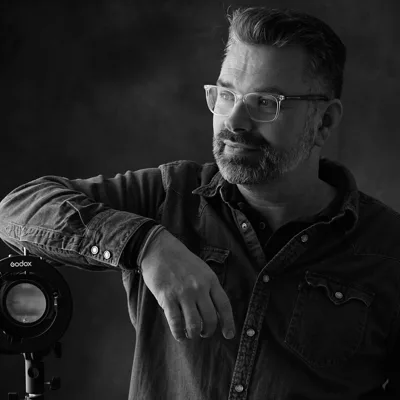
Michiel Heijmans, one of the editors
Updated on October 13, 2026
First, about those millimeters
If you're deciding between 28mm and 35mm for street photography, it helps to think about how much of the surroundings you want to show. Do you want to place someone among other people and buildings? Or would you rather focus on a smaller part of the scene? Then 50mm belongs in the discussion too.
The focal lengths in this article are full-frame equivalents. That lets us compare the angle of view without camera sensor size complicating things. On APS-C with a crop factor of about 1.5, an eighteen-millimeter lens is roughly equivalent to 28mm. A 23mm lens is equivalent to 35mm, and a 33mm or 35mm lens is roughly equivalent to 50mm.
So check which numbers you're comparing. Otherwise, you could end up making a lengthy argument about two lenses that show roughly the same thing.
The guide to setting up your camera for street photography briefly mentions focal lengths. Here, we'll look more closely: where do you stand, what goes into your frame, and what does that require of you while photographing?
Michiel Heijmans' more detailed article on cameras and lenses for street photography also covers the choice between 28mm, 35mm, and 50mm.
28mm: the surroundings play a part
With 28mm, you get a wide angle of view. A lot fits into your photo. That's useful when the surroundings add something to what someone is doing, or when you want to show several parts of a scene together.
That space does require some decisions. If you want someone to appear large in the frame, you need to stand close. Stay farther away, and the surroundings take up more of the photo. That may be exactly what you want. You just need to notice it before you press the shutter.
So look at what's happening beside your subject too. You can be so focused on that one person that you don't notice the rest of the frame until you get home. The rest was there all along, of course.
With 28mm, pay extra attention to the edges. People near the edge are more likely to appear distorted. Tilting your camera can also distort straight lines more noticeably. So don't just check whether everything is in the frame. Look at how it appears there too.
35mm: room without including everything
35mm sits between the wide view of 28mm and the narrower frame of 50mm. You keep some surroundings in your photo, with less distortion than at 28mm. It's a common focal length in street photography.
That makes it a useful starting point if you're still figuring out how much context you like. There's room to show someone within a scene, while including less of the surroundings than you would with 28mm.
A middle ground isn't an automatic solution, though. Even with 35mm, you need to decide how large someone should appear in the frame and what else needs to be there. Unfortunately, the lens won't make that decision for you.
When reviewing your photos, pay particular attention to the space around your subject. Does it contribute anything? Would you have liked to show more, or is there a lot of space you aren't doing anything with? That will help you see whether 35mm suits the way you see things.
50mm: a smaller part of the street
With 50mm, your angle of view narrows. You're more selective about what goes into the photo. Where 28mm includes plenty of the surroundings, 50mm lets you show a smaller part of the same scene and stay a little farther from your subject.
That can work for photos that need less of the surroundings. You don't have to explain the whole scene every time. Sometimes you want to single out one part. What you leave outside the frame then gets as much consideration as what stays in it.
50mm also produces less distortion and more natural-looking lines, which can be useful when your street photos include architecture. The background appears relatively closer. It's important to understand how that relates to where you stand.
Henri Cartier-Bresson almost always used a 50mm lens. That's also mentioned in the history of street photography. A well-known example, but no reason to feel you have to choose that focal length yourself. It needs to work at the distance you want to use.
Your distance determines the perspective
Changing focal lengths and taking a few steps are often treated as interchangeable. Yet they don't necessarily produce the same photo. Your distance from the subject determines the perspective, not the focal length itself.
Suppose you photograph someone with 28mm while standing close. Then you switch to 50mm and move farther away so that the person appears roughly the same size in your frame. The subject is then a similar size in the photo, but its relationship to the background changes. After all, you've changed where you're standing too.
That explains why the background can seem relatively closer in the second photo. The difference comes from the distance you use to get that framing.
You can try this at your own pace with a subject that stays still. Take the two photos and compare how the surroundings relate to the subject. Look beyond how much is included. That makes the difference between a different crop and a different perspective visible, without turning it into an afternoon of technical exercises.
Depth of field matters too
Your choice of focal length also affects what's in focus in your photo. At the same aperture, 28mm gives you more depth of field.
That's a separate consideration from how much of the surroundings you want to show. A focal length can make focusing easier while giving you a wider frame than you want. You've gained something, but you still need to decide what to do with all that space.
So review your photos with both points in mind. Is the focus where you want it? And is the amount of surrounding space right? Getting a lot in focus doesn't tell you whether you've photographed what you intended.
Working up close asks something different of you
Your distance from the subject has a human side too. Standing close to someone with 28mm is a different way of working than photographing from a little farther away with 50mm. Your position within the scene changes.
That difference is part of your choice. There's little point in looking only at example photos and ignoring the distance they were taken from. You're also choosing how to move among people.
Being close isn't an achievement in itself. It's a distance that affects your photo and your presence. How you weigh those considerations is up to you.
The article on respect on the street explores that human side further. So when assessing a focal length, consider how you work with it too. Does the distance it requires suit the photos you want to make?
Give one focal length a full walk
Choose one focal length for a walk and stick with it. You can do this with a zoom lens too: choose one setting. You don't need to buy anything new for this exercise.
That restriction helps you get better at anticipating what will fit in your frame. You look at a scene, estimate where you need to stand, and check with your camera to see whether you're right. Sometimes you are. Sometimes your estimate turns out to be a little optimistic. That's what the exercise is for.
Afterward, look at what kept giving you trouble. With 28mm, for example, you might notice that you're including a lot of the surroundings when you actually wanted someone to appear larger. With 50mm, you might find that you can't show enough of the scene. You can use that to try a different focal length on your next walk.
Assess the photos that work too. How far were you from your subject? What does the background add? That way, your choice is based on your own photos.
You don't have to pick a favorite for the rest of your photographic life right away. Choose something for your next walk. For now, that's a manageable decision.
Questions about 28mm or 35mm for street photography, or perhaps 50mm?
Should I start with 28mm or 35mm?
With 28mm, you include more of the surroundings and need to stand closer to make someone appear large in the frame. 35mm is a middle ground, still providing context with less distortion. Choose one for a walk and see whether the space around your subject suits what you want to show.
Is 50mm suitable for street photography?
Yes, 50mm gives you a narrower frame and lets you stay a little farther from your subject. It requires you to be more selective about which part of the scene goes into your photo.
Which lenses give equivalent focal lengths on APS-C?
With a crop factor of about 1.5, an eighteen-millimeter lens is roughly equivalent to 28mm on full frame. A 23mm lens is equivalent to 35mm, and a 33mm or 35mm lens is roughly equivalent to 50mm.
5 essential street photography tips
Sign up for Michiel’s newsletter and get his free e-book with practical tips and favorite street photos. First, confirm your email address using the link in the email.
About Michiel Heijmans
Portret- en straatfotograaf. Boeken: Straatfotobijbel (Photofacts Publishing), The Observer (Uitgeverij KOMMA), De Wet van de Straat (met mr. Charlotte Meindersma). Columns voor Photofacts, voorheen voor Focus Magazine. Expert Perfecte Plaatje 2025. Lezingen voor CameraNu en fotoclubs. Podcast 30…
View Michiel Heijmans’s profile